Hector Macrae
Drumnaguie and Polin are joined together and then comprised of 11 crofts. Each croft was a few acres in size but each crofter had a share in the common grazing, which was a large area of hill ground where the sheep spent most of the year, and where the cattle were put to graze during the day. From memory I would say that my grandparents, who we lived with, had about thirty sheep and three cows.
At this time all the houses had no running water or electricity and it was about 1956 before services were connected to the houses. Water had to be taken daily from a well and lighting was provided by paraffin lamps. All the cooking was done on a stove fuelled by peat which we had to cut each year.
Kinlochbervie was a very busy fishing port at this time and most of the fish landed went by lorry to Aberdeen. I remember a number of men from Drumnaguie and Polin worked as lobster fishermen and they had their boats at a small pier in Droman, which was another small crofting area over the hill from Drumnaguie and Polin.
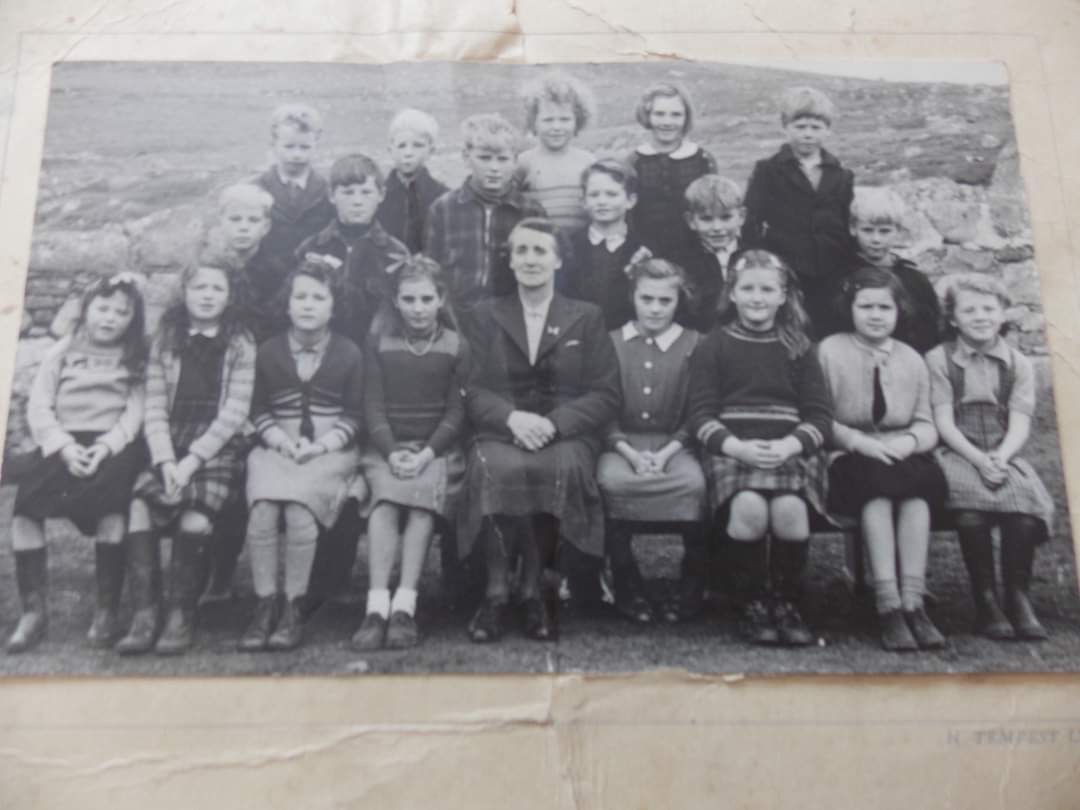
I remember that there was one school in the area that covered Oldshoremore to Sheigra. There was only one teacher and all the pupils sat in one room. Photo attached of school pupils in 1952. I am in the back row on the left.
Most morning we ate porridge made from oatmeal. As we always had plenty milk from the cows we used to take milk on our porridge. Sometimes we would have brose in the morning for breakfast. Brose did not require cooking; you just poured hot water onto a few spoons of oatmeal in a bowl and mixed it up. Again, brose was always taken with milk.
We ate a lot of fish as it was easy to get fish from Kinlochbervie and we sometimes went fishing off the rocks near the beach to catch our own fish. I remember a lot of people used to buy a barrel of salt herring and this was eaten a lot. The herring was always boiled and you ate potatoes with it. Most of the time you had a cup of milk with the salt herring.
Having three cows we usually had plenty milk. My grandmother used to make butter and crowdie with any spare milk we had. The cows used to be milked first thing in the morning and then they were put out to the common grazing and taken back in at night to be milked again. All the cows in the township were put out to graze together and they went anywhere they wanted on the common grazing. In the winter months they did not travel very far but in the summer months they went a good distance and then we had to go and look for them. As children we enjoyed going to take the cows in and we didn’t mind walking a good distance to look for them and take them back home for the milking.
We had about a dozen hens so we had plenty of eggs to eat. The hens were easy to look after and they ate scraps of food left over and corn, which was grown on the croft. My grandmother used to bake most days and she would either bake scones, pancakes or oatcakes. I remember there were two metal drums in the house, one for oatmeal and one for flour. I think the flour and oatmeal used to come in large bags and they were emptied into these drums to keep them dry.
Although the crofts were about three acres most of the ground was hilly and rocky. On the good flat land we used to grow our own potatoes. About April time the manure from the byre, which was put out daily, apart from Sundays, was spread on this small plot and once spread the ground was ploughed by the horse and plough and the potatoes planted. A few rows of early potatoes were planted and they were harvested about July. The main crop was lifted in September and this was then stored in the barn for the winter. I remember some potatoes were stored in a pit dug in a sandy piece of the croft and they were dug up once the potatoes in the barn were running low. We also used to grow turnips for our own use and also for feeding the cows and sheep. The sheep would only be on the crofts when they were taken in for the lambing or when they were put to the tups about November/December time.
One of my uncles had a lobster boat and at that time they only sent lobsters off to the market in London. The lobsters were boxed and loaded onto the mail bus that took them to Lairg where they went by train to London. As it didn’t pay to send the crabs caught to London they were either thrown back in or the claws were taken home and eaten.
Although ‘Organic food’ was never mentioned then, looking back on it now most of the food we ate would now be classed as organic. Our cows only ate hay that was harvested on the croft or what they ate on the common grazing. Our hens only ate corn that we grew and scraps of other food that was left over.
Anytime that we were walking on the rocks near the beach we always gathered whelks to take home and eat.
Growing up I would say that oats and potatoes were eaten every day. Fish was also a bit part of our diet. We did eat meat but I remember eating fish more that meat. This was probably due to the fact that it was easy to get fish in the Kinlochbervie area.